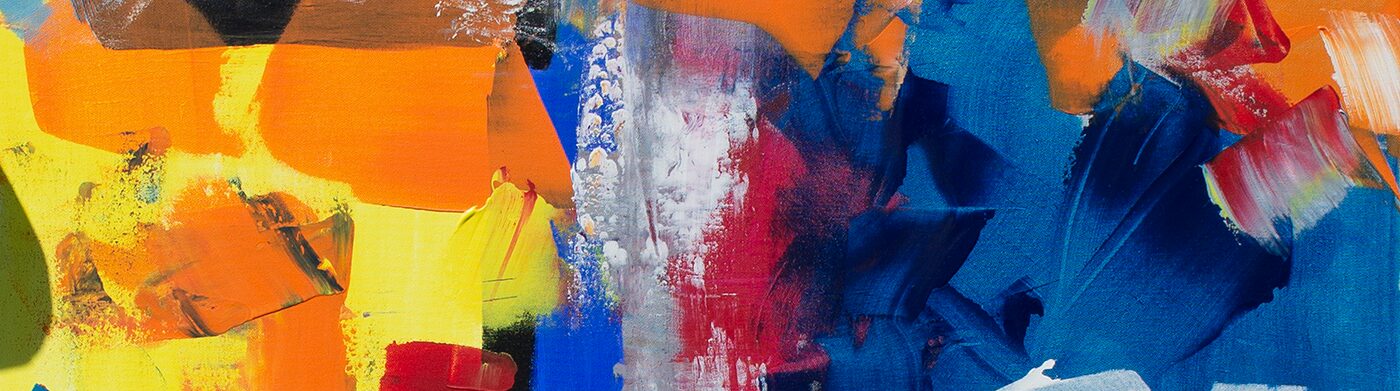
Why I Work in Layers: Building History Into Abstract Painting
People often see the finished surface of a painting and assume that is the whole story. It isn’t. What they are looking at is the last moment in a much longer conversation—one built through accumulation, revision, hesitation, and return. For her, working in layers is not a stylistic choice; it is the structure of the work itself. Each layer carries a decision, and each decision leaves a trace. Even when something is covered, it is not erased. It remains active, shaping what comes next.
A painting rarely starts where it appears to begin. The first marks are provisional—they establish a rhythm, a direction, sometimes a mistake that becomes necessary later. What follows is not a straight path but a series of adjustments, some deliberate and some discovered in the act of working. This kind of process aligns with what is often described as the creative process, where meaning develops through iteration rather than execution. In layered work, nothing is fixed too early and everything remains negotiable.
There are passages that disappear—marks that are buried, colors that no longer exist on the surface but continue to influence what is visible. Those hidden elements create tension and hold memory. The viewer may not see them directly, but they feel them. The painting carries a sense of depth that comes not from illusion, but from history. That history is part of what gives the work its presence—an idea closely connected to The Value of Her Work.
Each new layer responds to what is already there. A color shifts because something beneath it resists. A mark is softened because it arrived too quickly. A section is removed because it resolves too easily. This is not correction; it is conversation. That back-and-forth between action and response is something she explores more directly in When an Abstract Painting Starts Talking Back. The painting is not being imposed upon—it is being negotiated with.
Layering introduces time into the work in a way that cannot be replicated through a single gesture. Drying, returning, reconsidering—these pauses become part of the structure. The painting records not just what was done, but when and how it was done. In that sense, the work becomes less about image and more about duration. It holds evidence of decisions made over time, and that is what gives it weight.
Because the surface holds so much information, how it is finished becomes critical. A reflective layer can obscure what is subtle, and a heavy finish can flatten what was carefully built. This is why material choices—like opting for a non-reflective finish—become part of the process itself, something discussed further in Why I Choose Matte Varnish (and Sleep Just Fine Because of It). The goal is not to add something new at the end, but to allow what is already there to remain visible.
Working in layers also changes the way mistakes function. A mark that doesn’t work is not a failure—it is material. It can be covered, softened, disrupted, or reintroduced in another form. It becomes part of the painting’s internal logic. That willingness to let things evolve rather than resolve immediately is closely tied to how inspiration actually develops, as explored in Inspiration: How Does That Actually Happen?. In layered work, nothing is final until it is necessary.
What remains on the surface is only part of what the painting contains. Beneath it are decisions, revisions, hesitations, and returns—a record of attention over time. The viewer may not see each layer individually, but they encounter the result of all of them at once. That accumulation is what gives the work its density, not just visually but experientially. The painting doesn’t just show what it is—it holds how it became.
Available Work: