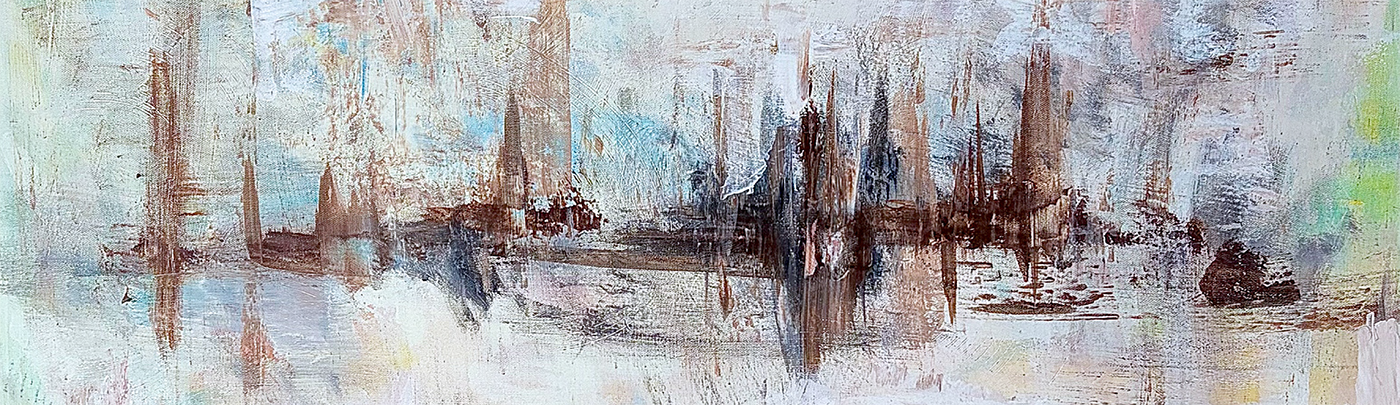
Displaying Abstract Art: What I Want Viewers to Know
From the outside, an art fair can look exciting, even glamorous. Rows of white tents, walls filled with paintings, collectors strolling slowly through the aisles with coffee in hand. For visitors, it can feel like a relaxed afternoon surrounded by creativity. For the artist standing inside the booth, the experience is often something very different.
Long before the first visitor arrives, an art fair already demands a quiet emotional investment. There is the preparation—selecting pieces, transporting them, arranging the booth so that the work speaks clearly. Artists make dozens of decisions about which paintings deserve the limited wall space, knowing each choice leaves another work behind in the studio. That alone carries weight. Each painting represents hours, sometimes weeks, of attention, doubt, and persistence. When those works are placed in a booth, they are no longer private expressions; they are suddenly exposed to the public eye, and that exposure can feel surprisingly vulnerable.
Unlike a gallery setting, where a curator often acts as an intermediary, the art fair places the artist directly beside the work. The artist becomes both creator and representative—answering questions, explaining process, and watching reactions unfold in real time. Some visitors pause and study a painting quietly. Others walk past without a glance. A few step closer, lean in, and ask thoughtful questions that remind the artist why the work began in the first place. But many moments fall somewhere in between.
Visitors might comment casually about color, price, or whether a piece would match a sofa. Some discussions revolve less around the art itself and more around practical considerations like size, framing, shipping, or discounts. While these conversations are part of the marketplace, they can sometimes feel distant from the emotional energy that went into creating the work. For the artist, every interaction carries a subtle emotional charge.
A moment of connection—when someone stands quietly with a painting and clearly feels something—can be deeply affirming. Those moments sustain many artists through the long hours of an art fair. Yet the opposite moments linger as well. When visitors glance briefly and move on, or when someone dismisses the work with a quick remark, the artist cannot help but absorb some of that response. It is difficult to separate critique of the artwork from critique of oneself when the two feel so closely connected. That dynamic—how viewers respond to what they see—is explored more deeply in When an Abstract Painting Starts Talking Back.
The physical exhaustion also plays a role. Art fairs often stretch across several long days, and artists stand for hours, maintain conversation, stay attentive, and continue presenting their work with enthusiasm even when energy begins to fade. By the end of the event, the emotional landscape can feel complicated. There may be sales, new collectors, meaningful conversations, and the quiet satisfaction of having shared something personal with the world. At the same time, there may also be lingering questions, moments of doubt, and the familiar internal dialogue artists carry about the value of their work.
That question of value—what actually matters in the exchange between artist and viewer—is considered further in The Value of Her Work. Still, most artists return to art fairs again. Despite the emotional toll, these events offer something that the solitude of the studio cannot: direct human connection.
For broader context on how these events function within the art world, resources on art fairs provide additional insight into their role in connecting artists, collectors, and audiences.
When someone discovers a painting and responds to it honestly, the distance between artist and viewer disappears for a moment. In that brief exchange, the long hours in the studio find their purpose. And for many artists, that moment—however fleeting—makes the vulnerability worthwhile.
Available Work: